Packing & shipping
Gift box or shipping box? Plan both jobs before dispatch
Keep presentation, product protection and the shipping enclosure clear. Compare complete packed samples and confirm their final measurements before choosing.
Read articlePacking & shipping
One bigger box is not automatically cheaper. Compare the actual packing plans, volumetric calculation, extra work and waiting time on the same basis.
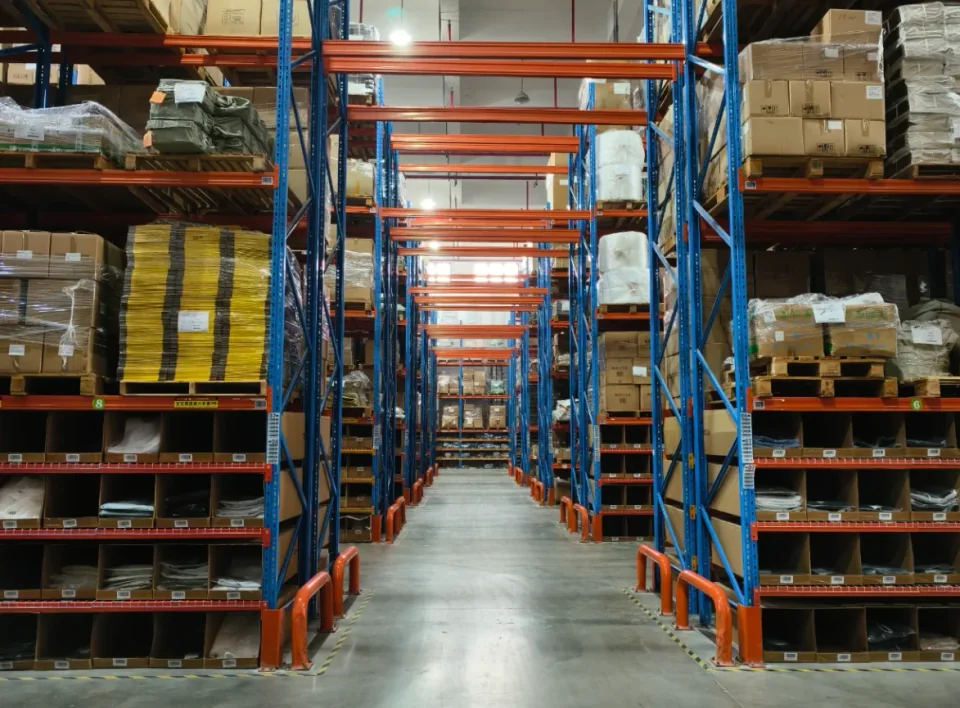
Consolidation can mean bringing several supplier deliveries to one warehouse or repacking goods into fewer outgoing boxes. Those are different decisions. Start by identifying the goods, their order references and the intended recipient. Combining stock for one shipment is not the same as combining separate buyers’ orders into one delivery; preserve the fulfilment plan for each order.
Ask what needs to remain separate for identification, presentation or protection. Some supplier packaging may be necessary to distinguish variants or protect a fragile component. If one supplier has not delivered, choose whether waiting serves the shipment’s purpose. Fewer international parcels may be attractive, but they are only one part of the total arrangement.
Request the final outer dimensions and gross weight for each separate box, then for the proposed combined box. Include all protection and the carton itself. DHL explains why a bulky light parcel can be priced using volumetric weight, with service-dependent rules. A calculation needs the divisor and unit basis actually confirmed for the quoted route.
Do not apply one carrier’s published divisor to every service. Also ask how the route handles multiple parcels, rounding, minimum charges and unusual sizes. If the proposed combined dimensions are only an estimate, label them as such and make final measurement a condition of the quote. The scale weight alone cannot settle the comparison.
Suppose two packed boxes each measure 30 × 20 × 15 cm and weigh 2 kg. Their combined external volume is 18,000 cm³ and their total gross weight is 4 kg. A proposed consolidated box measures 40 × 30 × 20 cm and weighs 4.4 kg: 24,000 cm³. Although there is now one box, its volume is one third larger and its gross weight is higher.
For this example only, suppose the quoted route confirms a divisor of 6,000 cm³/kg. The separate boxes produce 1.5 kg of volumetric weight each, or 3 kg together; the combined box produces 4 kg. These are calculation outputs, not final billable weights or a price. Apply the actual route’s comparison, rounding and minimum rules before deciding. The divisor is hypothetical, not a Jeton rate.
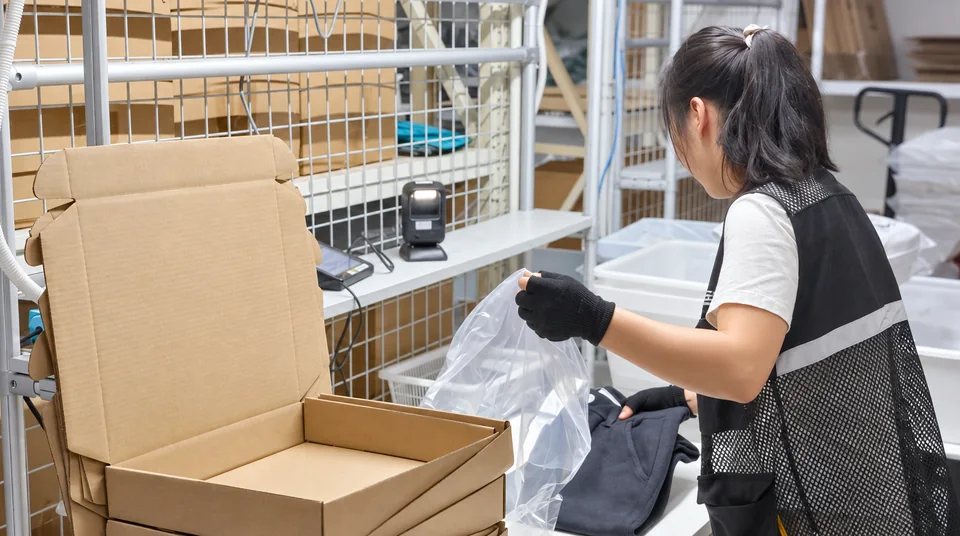
A smaller box is useful only if the approved protection and identification remain suitable. UPS describes packaging methods for different goods and using cushioning to limit movement. Show the proposed inner arrangement and sealed outer box before agreeing to remove packaging. Gift presentation and transit protection may need to remain as separate layers.
Compare transport alongside receiving, sorting, repacking materials and labour, domestic transfers and any agreed holding charges. Include the effect of waiting for the last supplier: the relevant question is whether your order can still be prepared and dispatched as intended. No saving percentage can be inferred from the parcel count. Keep unknown amounts open and request a quote with the same included scope for both options.
Before release, match every outgoing carton to the supplier and order references it contains. Record any items that remain behind, the replacement of old carton references and the approved packaging version. For partial arrivals, an explicit list of goods in this departure is more useful than “send everything.”
Ask for a final comparison showing parcel count, measured dimensions, gross weight, applicable calculation rule, included handling and unresolved charges. Decide who approves repacking and who releases the goods. If packing changes, update the comparison before dispatch. The result may favour separate boxes, consolidation or a staged departure; the defensible choice is the one supported by the final plan.
Your next decision
Compare the measured packing options and full handling scope. Choose consolidation only when its complete arrangement fits the order, rather than assuming fewer boxes means lower cost.
Official references support the points identified below. Examples in this article illustrate planning decisions; they are not customer case studies.
Explains volumetric weight and service-specific rules. Its published divisor is not applied to our example or every Jeton route.
Product-dependent protection and cushioning; carrier-specific dimensions and numerical examples are not adopted.
Share your product, destination and the decision you need help with. Our team can clarify the service scope and the next step with you.
Talk to our teamPacking & shipping
Keep presentation, product protection and the shipping enclosure clear. Compare complete packed samples and confirm their final measurements before choosing.
Read articlePlanning your order
A practical way to compare two shipping proposals: match the goods, identify who handles import charges, and resolve exclusions before release.
Read article
Packing & shipping
Map each item to its parcel, record separate releases and explain what remains. A delivered first package should not hide an unfinished second one.
Read article