
Order care
Damaged parcel: what to record before the next step
Link the product, inner protection, outer box and label to one order. Keep observations separate from assumptions about cause, compensation or return handling.
Read articlePacking & shipping
Keep presentation, product protection and the shipping enclosure clear. Compare complete packed samples and confirm their final measurements before choosing.
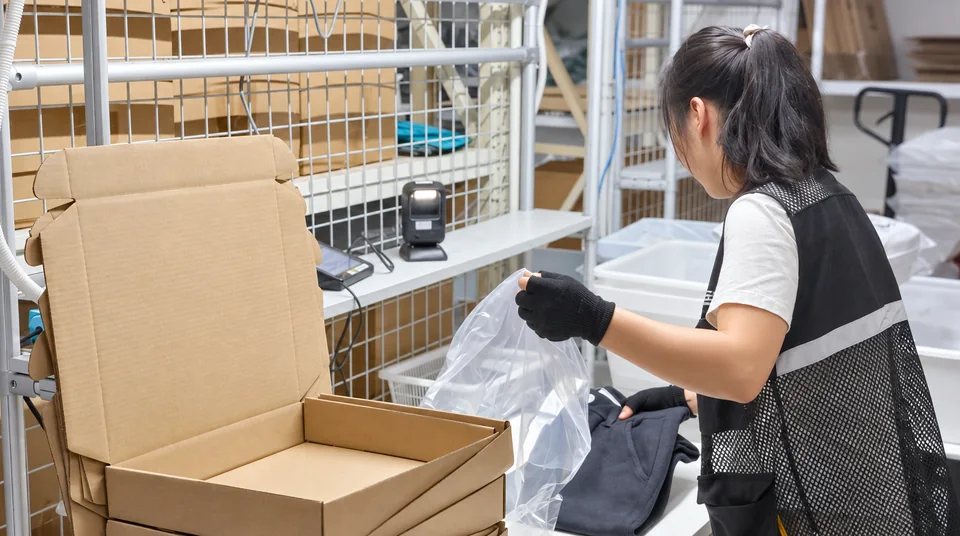
Start with what the buyer should receive: the correct item, the agreed gift presentation and any insert. Then separate three jobs: presenting the product, protecting it from movement and contact, and enclosing it for transport. One component may do more than one job, but a good-looking box is not enough evidence that all three are covered.
UPS describes different one-box and two-box methods according to the goods. Use that distinction to ask whether your chosen gift box needs a separate shipping enclosure. Record the actual product, vulnerable features and intended service before selecting materials. A label saying “fragile” does not resolve a loose item or a poorly supported projecting part.
Build a sample with the relevant product, including accessories and the intended gift card. Check where the item touches the insert, whether loose components can rub against it, and what happens to delicate parts when the presentation lid closes. Record gift-box scuffs and product condition as separate observations. An attractive opening sequence can still hide an awkward pressure point.
Next examine how the presentation box sits inside the transport enclosure. Identify movement, gaps and unsupported corners rather than adding filler without a purpose. Ask the packing team to demonstrate the agreed arrangement and any needed assessment. Photograph the open layers as well as the closed parcel so another person can follow the same sequence.
Imagine a hypothetical ceramic bird ornament with a projecting beak, presented in a gift box. Option A puts that gift box in a compact outer carton with a fitted support. Option B uses a larger outer carton with a different support arrangement. Both are planning options, not tested products or customer results.
Compare the same ornament, gift box and insert in both. Does the support carry the gift box without pressing on the beak? Can the ornament move inside its presentation box even when the outer box stays still? Can the packer repeat the arrangement without squeezing the lid shut? The smaller option should be selected only if its agreed protection and presentation checks are satisfied; the larger one needs a reason for the extra space.
Record the outside length, width and height of the finished parcel, plus gross weight including every packing component. Keep units explicit and distinguish measured values from estimates. An empty gift-box specification cannot represent the parcel once supports, outer carton, tape and other agreed materials are added.
DHL explains how bulky protective packaging can affect volumetric weight. Ask the quoting team which measurement, charging and rounding rules apply to the actual service. Compare quotes using the two finished packing options, not the same assumed dimensions. If the sample changes, remeasure it before treating the previous shipping proposal as current.
Keep the item reference, gift-box version, protection components, layer order, pack-out photos and final measurements together. Name who approves presentation and who confirms any agreed protection checks. A change to a support, insert or box size should be visible in the packing version instead of being treated as a harmless substitution.
Before a batch is released, use a representative packed sample to confirm the current instruction. If a product variant changes the fit, review that variant rather than assuming one photograph covers every size. Ask for a proposal with your product photos, fragile features, gift requirements and destination. The useful decision is the complete packed method and its shipping scope, not the gift-box price alone.
Your next decision
Choose the gift presentation and transit protection together, then approve a repeatable pack-out and quote the measured finished parcel.
Official references support the points identified below. Examples in this article illustrate planning decisions; they are not customer case studies.
Different one-box and two-box methods and movement control; the article does not adopt uniform cushioning thicknesses.
Explains packaging space and volumetric weight; confirm the actual service’s charging rules for each finished option.
Share your product, destination and the decision you need help with. Our team can clarify the service scope and the next step with you.
Talk to our teamOrder care
Link the product, inner protection, outer box and label to one order. Keep observations separate from assumptions about cause, compensation or return handling.
Read article
Packing & shipping
One bigger box is not automatically cheaper. Compare the actual packing plans, volumetric calculation, extra work and waiting time on the same basis.
Read articlePlanning your order
Connect sample approval to measurable requirements, keep uncertain stock separate, and make a release decision based on the checks actually performed.
Read article