Same SKU, different names: prepare personalised orders correctly
The same base product can carry different names, fonts and revisions. Connect each item to its own approved instruction before packing and dispatch.
By Jeton Express
·3 min read
AI-assisted retouching for presentation.
In this article
Use the SKU for the base item, not the whole instruction
A shared SKU can identify a base item while several buyers request different personalisation. It does not identify whose name belongs on which piece. Keep the order reference and line-item reference alongside the SKU, quantity and physical variant. If one order contains two personalised units, make each unit’s instruction identifiable rather than treating the quantity as two identical copies.
Etsy distinguishes personalisation in Custom options from stock-related variations. Read the actual buyer input on the order, then agree how the working instruction reaches the preparation team. A generic product photo or stock name cannot replace it. Test the agreed export or manual handover with one example order before relying on it for a group of personalised pieces.
Keep exact text separate from its layout
Record the supplied spelling, accents, capitalisation and line breaks without translating or normalising them. Separately record the selected font or design reference, placement and any approved proof. A short phrase can still be wrong if its lettering changes the intended name. When the chosen font cannot render a character, ask for an approved alternative instead of deleting the accent.
Keep the production instruction distinct from a gift message or a note to the seller. “Please send this for my sister” is context, not automatically text to print. If the order leaves a choice open, identify the person who asks the buyer and approves the answer. Blank input should remain unresolved rather than turning into a guessed default.
A three-order example makes the risk visible
Imagine three hypothetical orders using the same base charm SKU. P-01 requests “Zoë”, P-02 requests “Zoe”, and P-03 requests “Márta” in font F-2. These are invented names and references for planning. Sorting only by SKU could put all three into one pile; copying the first instruction could give every piece the same name.
Use separate labelled work references for the three pieces and compare each proof with its order. If F-2 cannot produce the accented character in P-03, pause that piece for clarification while preserving the other two instructions. Do not change all orders because one font choice is unresolved. An approved alternative belongs only to the specific order and revision it addresses.
Make a change replace a version, not create ambiguity
If a buyer corrects the text, attach the confirmed change to its order and line item. Mark the earlier instruction superseded, identify the new revision and tell the team whether work already started. Agree who can hold or release the piece and whether any remake, charge or timing change needs further discussion. A general chat message saying “use the new name” is too easy to apply to the wrong item.
Also confirm how cancellations reach preparation. ShipStation specifically states that it does not recognise Etsy cancellations automatically; other tools must be checked on their own terms. Do not assume a refreshed order list removes every old instruction. The operational question is which version is currently authorised for this piece.
Match the piece, instruction and parcel before release
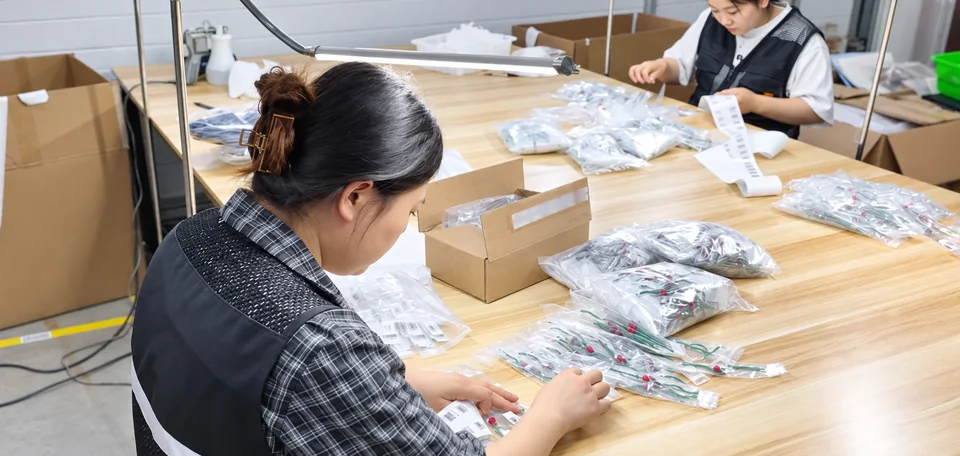
Before sealing, have the agreed reviewer match the prepared piece to its current instruction, order reference and correct parcel label. Confirm the font, text and placement that are actually visible, and record any agreed checks beyond appearance separately. Keep a useful reference to the checked revision; do not treat a photo as proof of every product characteristic.
Etsy requires sellers to protect buyer personal information. Share only the details required for each agreed role: a production reference may not need a full address, while the authorised shipping process will need delivery information. Keep buyer names and readable labels out of public examples. Discuss workflow using invented references first, then handle real order details through the agreed channel.
Your next decision
A base SKU can be shared; the buyer’s instruction and its approval cannot. Release each piece against its own current order, text and revision.
Sources & further reading
Official references support the points identified below. Examples in this article illustrate planning decisions; they are not customer case studies.
Link the product, inner protection, outer box and label to one order. Keep observations separate from assumptions about cause, compensation or return handling.